Generator vs. Battery Backup for Commercial Outages
Columbia business owners asking about backup power usually land on one question: should we use a generator, batteries, or both? The honest answer depends on what you need to protect and for how long.
Think of it like this: batteries are a sprint, generators are a marathon. Batteries respond instantly but run out. Generators take a few seconds to start but can keep going as long as they have fuel.
Side by side
| Factor | Standby generator | Battery backup (UPS or battery storage) |
|---|---|---|
| Response time | Usually seconds | Instant, no interruption |
| Runtime | Hours to days, as long as fuel lasts | Minutes to hours, based on capacity |
| Best for | Whole-building or large loads, long outages | Sensitive electronics, short outages, bridging to a generator |
| Fuel | Diesel, natural gas, or propane | None, but needs recharging |
| Noise and emissions | Yes | Quiet, no on-site emissions |
| Maintenance | Engine, fuel, cooling, batteries, ATS | Battery testing, replacement, inverter checks |
| Weak point | Starting, fuel, and transfer failures | Limited stored energy, battery aging |
When a generator makes sense
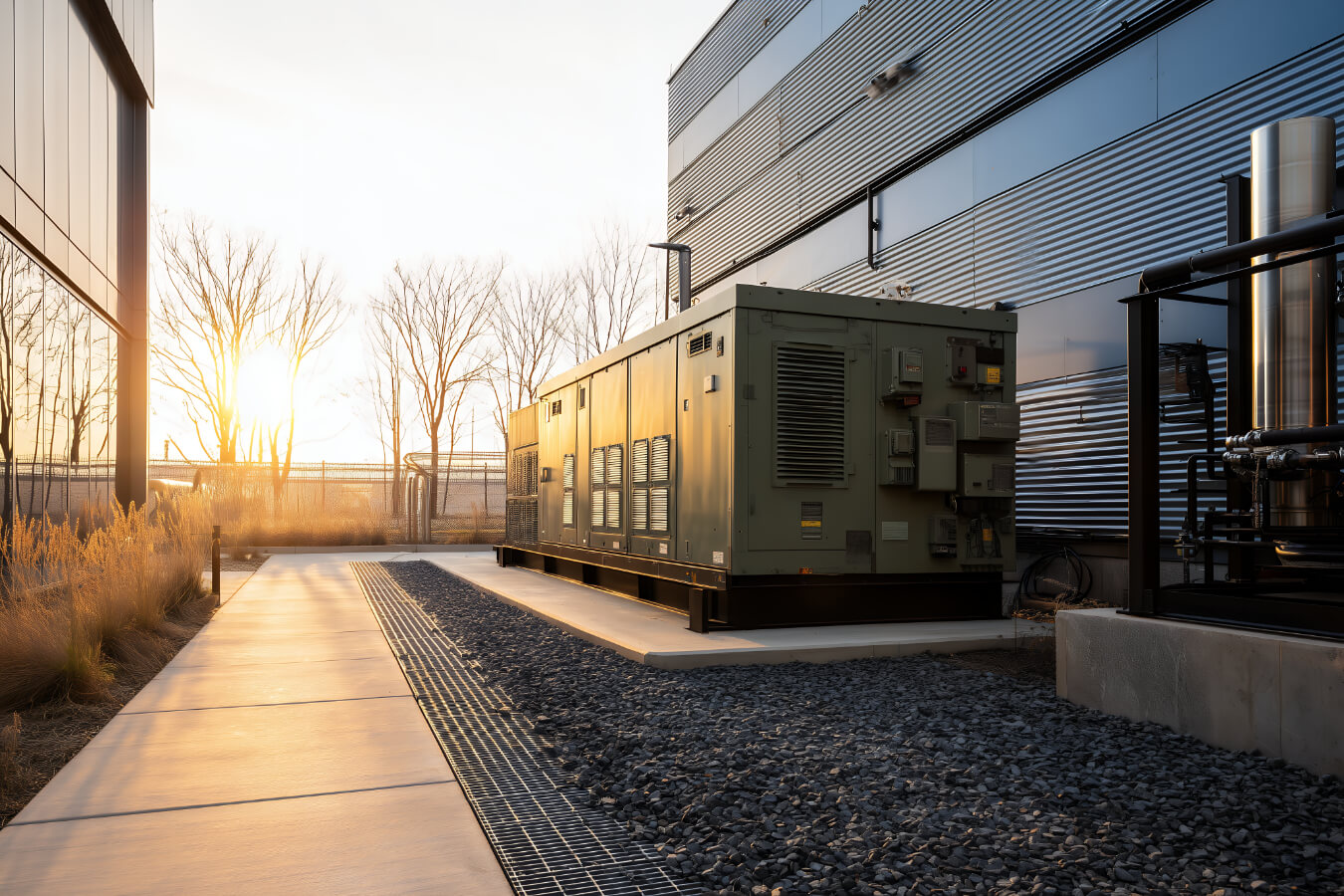
If your facility needs to keep running through a long Midlands outage (refrigeration, production, healthcare, water pumps, or whole-building HVAC), a generator is usually the backbone. Batteries alone can't economically store enough energy for multi-day events with heavy loads.
When batteries make sense
Batteries shine where even a few seconds of interruption is a problem: servers, network equipment, process controls, medical devices, and security systems. A UPS keeps them running through the seconds it takes a generator to start, or long enough for a safe shutdown.
Larger battery storage systems can also cover short outages entirely and, in some setups, help reduce utility demand charges.
Why many facilities use both
For most critical sites, the best answer is a hybrid:
- The UPS or battery system carries critical loads the instant utility power drops
- The generator starts and stabilizes
- The transfer switch moves loads to the generator
- The generator carries the facility for the rest of the outage
This gives you no-gap protection and long runtime.
Questions to ask before you choose
- Which loads can't tolerate any interruption at all?
- How long do you need to run during a worst-case outage?
- How much load are we talking about?
- Are there noise, emissions, or space limits at your site?
- Who will maintain the system, and how often?
Heat matters for batteries too
Battery life drops in high temperatures. In Columbia, battery rooms and outdoor cabinets need proper cooling and ventilation, and batteries should be tested regularly rather than assumed healthy.
Get the right mix with Triple T
Triple T Critical Power Services helps Columbia and Midlands businesses size, maintain, and test generators, transfer switches, and supporting battery systems, so your backup plan fits your actual needs.
Learn about our planned generator maintenance.
Frequently asked questions
Can batteries replace a generator? For short outages and small loads, sometimes. For long outages and large loads, batteries alone usually aren't practical.
Why use a UPS if we have a generator? The generator needs a few seconds to start. A UPS keeps sensitive equipment running during that gap.
Which needs more maintenance? Generators have more moving parts and fuel to manage. Batteries need regular testing and eventual replacement. Both need a plan.