Critical Power System Inspections: What Facility Managers Should Expect
If you manage a facility in Columbia or the Midlands, you've probably had a generator "serviced." But service visits vary a lot. Some are a quick oil check and a signature. Others give you a clear picture of whether your whole backup power system will work.
Here's what a thorough critical power inspection should include, so you know what to expect and what to ask for.
Before the visit
A good provider will ask for, or review:
- Equipment make, model, age, and run hours
- Past service records and open issues
- Any alarms or problems your staff has noticed
- Which loads are on backup power
- Whether any equipment has been added since the last visit
What gets inspected
Generator engine Oil level and condition, leaks, air filter, exhaust system, block heater, and general condition.
Cooling system Coolant level and protection, hoses, belts, radiator condition, fan, and airflow around the unit. In Columbia's climate, this deserves extra attention before summer.
Fuel system Tank level, water and sediment checks, fuel quality sampling when due, filters, lines, vents, and day-tank operation.
Starting system Battery condition and load testing, charger operation, cables, and terminals.
Alternator and electrical Output voltage and frequency, connections, breakers, and signs of overheating.
Controls and alarms Controller settings, alarm history, sensor operation, and remote monitoring alerts.
Automatic transfer switch Visual and mechanical inspection, connection checks, settings, and ideally an actual transfer test.
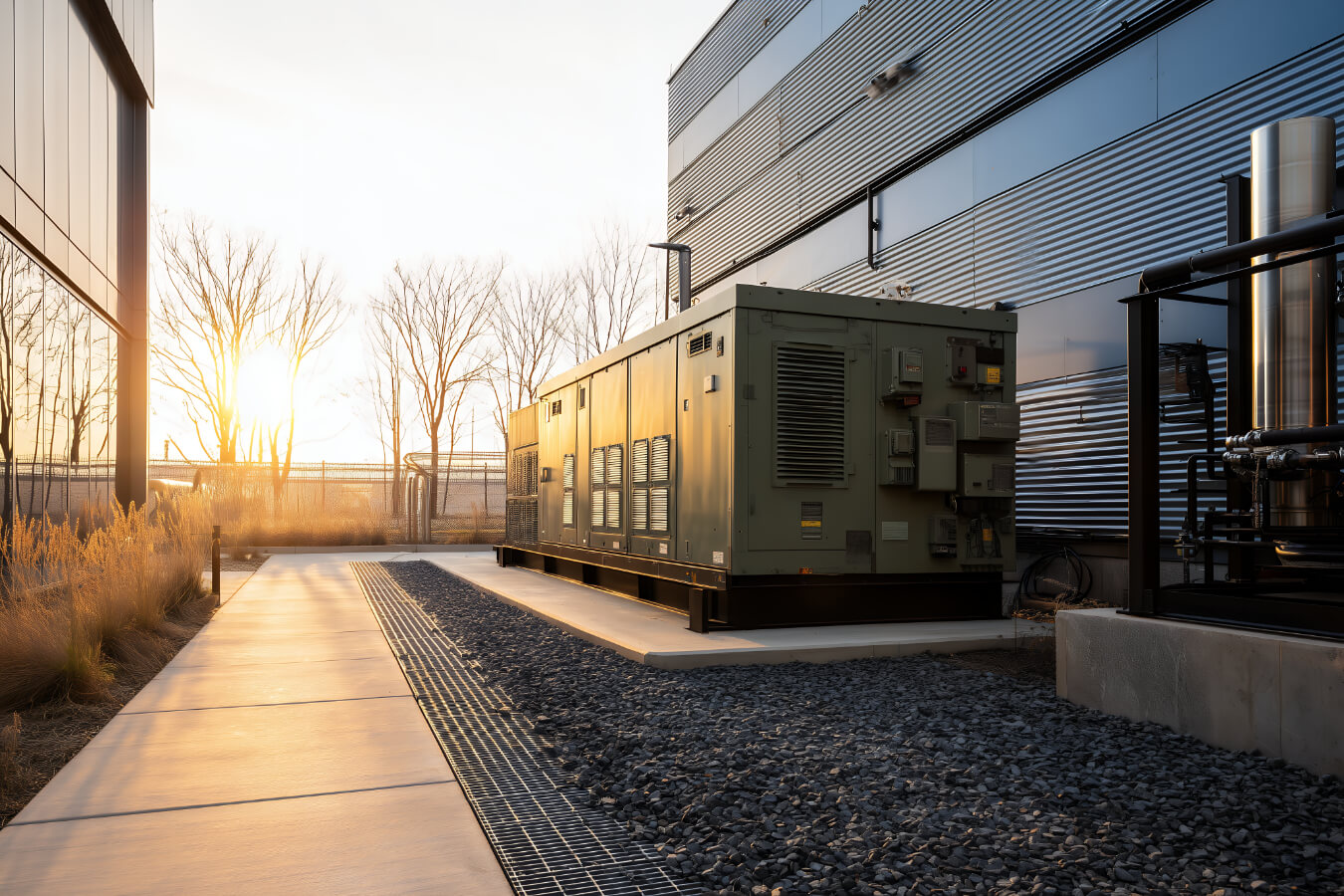
Enclosure and site Louvers, doors, weather sealing, pests, drainage, and clearance around the unit.
Testing you should expect at the right intervals
| Test | What it proves |
|---|---|
| Exercise run | The unit starts and runs |
| Transfer test | The ATS senses an outage and moves the load |
| Load bank test | The generator can carry rated load for an extended time |
| Battery load test | Batteries can actually crank the engine |
| Fuel analysis | Fuel is clean and usable |
| Infrared scan | Hot spots in connections before they fail |
Not every test happens at every visit, but each should be on a schedule.
What you should get afterward
A useful report is more than a checklist. It should tell you:
- What was inspected and tested, with readings
- What's wrong, ranked by risk
- What was fixed on site
- What still needs attention, with recommended timing
- Anything that affects compliance
If your report doesn't tell you whether the system is ready for a real outage, ask why.
Red flags in a service program
- Reports with no readings, just checkmarks
- The transfer switch is never tested
- Batteries are only checked for voltage at rest
- No load testing, ever
- The same issue shows up visit after visit with no plan to fix it
Inspections done right by Triple T
Triple T Critical Power Services provides full critical power inspections for facilities across Columbia and the Midlands, covering generators, transfer switches, fuel, batteries, cooling, and controls, with clear reports you can act on.
Explore our planned generator maintenance.
Frequently asked questions
How long does an inspection take? It depends on system size and the tests included. A thorough inspection of one generator and ATS usually takes a few hours.
Will my facility lose power during the inspection? Most inspection work doesn't interrupt power. Transfer tests can be scheduled and coordinated so operations aren't disrupted.
How often should inspections happen? Most commercial systems benefit from regular visits through the year, with load and transfer tests on a set schedule.