How Columbia’s Heat and Humidity Affect Generator Reliability
Commercial generators are designed to operate in demanding conditions, but South Carolina weather can place additional stress on critical power equipment. For facilities in Columbia and across the Midlands, heat and humidity are not just comfort concerns. They can affect cooling systems, batteries, electrical connections, fuel quality, ventilation, controls, and the reliability of a standby generator.
Those effects may not always create an immediate failure. Instead, environmental conditions can gradually increase wear, expose weak components, and reduce the margin a generator has available when it needs to operate under sustained load. That makes local operating conditions an important part of generator maintenance and critical power planning.
Why Columbia’s Climate Matters for Backup Power
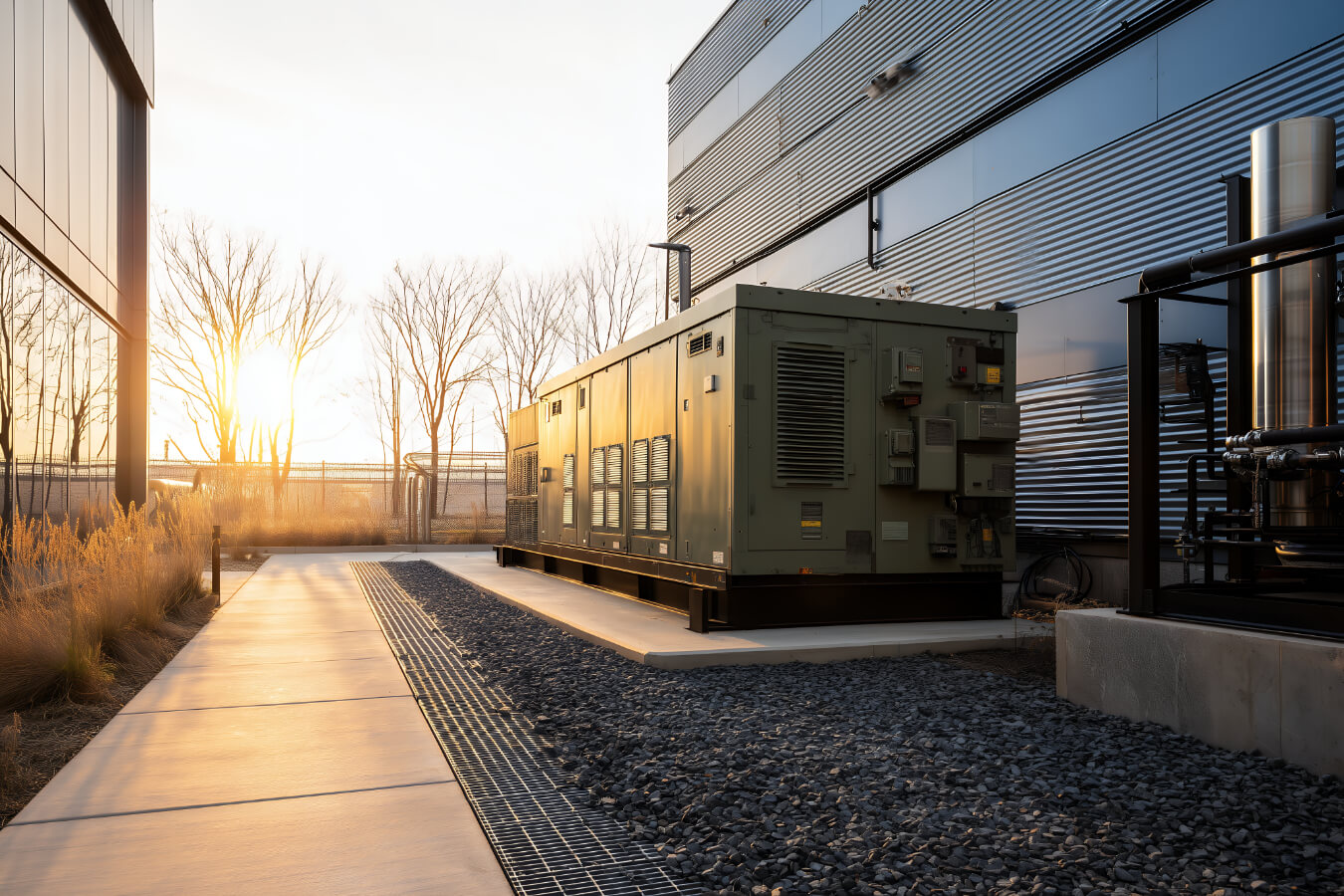
Commercial generators do not operate in a controlled laboratory environment. They may sit outdoors in enclosures, inside mechanical rooms, beside manufacturing facilities, or on rooftops and equipment pads. Throughout the year, they are exposed to changing temperatures, moisture, dust, storms, and other environmental conditions.
In Columbia and the Midlands, extended periods of high heat and humidity can be particularly demanding.
A generator may operate normally during a short weekly exercise but experience very different conditions during a prolonged summer outage. Once the engine is carrying significant electrical load, it produces substantial heat of its own.
If outside temperatures are already high, the cooling system has less margin for error.
At the same time, humidity can contribute to corrosion, electrical deterioration, and moisture-related issues throughout the system. The result is that environmental conditions can turn relatively small maintenance problems into larger reliability concerns.
Heat Places Additional Demand on Generator Cooling Systems
A commercial generator creates significant heat when operating. The cooling system must continuously remove that heat to keep the engine within an acceptable operating range.
Depending on the equipment, this may involve:
- Radiators
- Cooling fans
- Coolant
- Water pumps
- Thermostats
- Hoses
- Belts
- Louvers
- Ventilation systems
- Remote radiators
When ambient temperature rises, the system has to reject engine heat into already-warm surrounding air. If the cooling system is in good condition and properly designed, it should account for expected operating conditions. But if airflow is restricted, coolant is low, hoses are deteriorating, or the radiator is dirty, high summer temperatures can expose the weakness.
Why Generator Overheating Is More Likely Under Load
A short no-load exercise does not create the same thermal conditions as sustained generator operation. During an outage, the generator may be carrying HVAC systems, pumps, production equipment, refrigeration, lighting, and other critical loads.
As electrical load increases, engine heat generally increases as well. That means a generator can appear healthy during exercise but overheat when the facility actually depends on it.
Possible signs include:
- Rising coolant temperature
- High-temperature alarms
- Reduced performance
- Coolant loss
- Fan or belt issues
- Automatic shutdown
Facility managers in the Midlands should pay particular attention to cooling system condition before peak summer weather.
Radiator Condition Matters
The radiator is responsible for transferring heat from the coolant into the surrounding air.
Anything that reduces airflow through the radiator can reduce cooling performance.
Possible problems include:
- Dirt
- Dust
- Leaves
- Debris
- Bent fins
- Oil residue
- Blocked airflow paths
Outdoor generators can accumulate contaminants over time, particularly in industrial or construction environments. A partially restricted radiator may still appear adequate during light exercise. Under full load on a hot Columbia afternoon, the same restriction may become a serious problem. Routine inspection and cleaning can help preserve cooling capacity.
Generator Room Ventilation Can Become a Limiting Factor
Indoor generators depend on properly designed ventilation. The room must allow enough air for combustion and cooling while also removing heat generated by the equipment.
Common problems include:
- Blocked louvers
- Failed ventilation fans
- Restricted intake openings
- Recirculation of hot discharge air
- Inadequate room size
- Storage placed near airflow paths
- Modified walls or doors that reduce ventilation
Facility changes can also create problems. A generator room that worked correctly when the system was installed may perform differently after renovations, equipment additions, or changes to ventilation. High outdoor temperatures make proper airflow even more important. If hot radiator discharge air is pulled back into the room, generator temperature can rise quickly.
Coolant Condition Is Important
Coolant does more than prevent freezing. It also helps manage engine temperature and protect internal cooling system components. Over time, coolant can become contaminated or lose important chemical properties.
Problems may include:
- Incorrect coolant concentration
- Low coolant level
- Contamination
- Corrosion
- Deteriorated additives
- Leaks
Facility managers should follow manufacturer recommendations for coolant inspection, testing, and replacement. A cooling system should not be judged solely by whether there is liquid visible in the reservoir. Coolant condition matters too.
Hoses and Belts Can Deteriorate in Heat
Rubber components are affected by age, temperature, and operating conditions. Generator belts and hoses may harden, crack, soften, glaze, or lose tension over time.
High temperatures can accelerate deterioration. A worn belt may affect the cooling fan or other engine-driven components. A deteriorated hose may begin leaking under pressure once the generator reaches operating temperature. These components are relatively small compared with the generator itself, but their failure can shut down the entire system.
Visual inspection should look for:
- Cracking
- Fraying
- Bulging
- Soft spots
- Hardening
- Fluid residue
- Loose clamps
- Improper tension
Batteries Are Also Sensitive to Heat
Generator starting batteries spend most of their lives waiting. When utility power fails, they must immediately provide enough current to crank the engine. High temperatures can accelerate internal battery degradation. This means a battery may appear functional but lose capacity faster than expected in a hot environment.
Warning signs may include:
- Slow cranking
- Low voltage
- Corroded terminals
- Charger alarms
- Frequent replacement
- Reduced load-test performance
Battery age alone should not determine condition. Proper testing is important because open-circuit voltage does not always reveal whether the battery can provide sufficient starting current.
Battery Chargers Need Attention Too
A healthy starting battery still depends on the charger. The charger keeps the battery ready while the generator is in standby.
Potential problems include:
- Charger failure
- Incorrect charging voltage
- Loss of AC supply
- Loose connections
- Corrosion
- Failed fuses
- Controller alarms
A charger fault can quietly reduce battery readiness over time. If the problem develops between inspections, the generator may remain unavailable without anyone realizing it. Remote monitoring can help identify charger faults and low battery conditions sooner.
Humidity Can Increase Corrosion Risk
Humidity affects more than comfort. Moisture can contribute to corrosion on electrical and mechanical components.
Potential areas of concern include:
- Battery terminals
- Grounding connections
- Electrical cabinets
- Breakers
- Control wiring
- Terminal blocks
- Enclosure hardware
- Fuel system components
Corrosion increases electrical resistance and can weaken connections. Over time, that may lead to heat buildup, unreliable signals, voltage problems, or intermittent faults. This is especially important for outdoor equipment and generators located in damp or poorly ventilated areas.
Electrical Connections Should Be Inspected
Commercial generators rely on many electrical connections. These include power conductors, control wiring, sensing circuits, battery cables, grounding conductors, and communication wiring. Heat, humidity, vibration, and thermal cycling can all contribute to deterioration.
Potential warning signs include:
- Discoloration
- Corrosion
- Loose hardware
- Heat damage
- Damaged insulation
- Abnormal voltage readings
- Intermittent alarms
Appropriate electrical inspection and testing can help identify developing problems before they affect operation.
Generator Enclosures Need to Stay Weather-Tight
Outdoor generators depend on their enclosures to protect internal components. Over time, seals, gaskets, doors, vents, and hardware may deteriorate. Storms and heavy rain can expose weaknesses.
Facility teams should inspect for:
- Damaged seals
- Loose doors
- Corrosion
- Standing water
- Failed drains
- Water intrusion
- Damaged louvers
- Deteriorated enclosure panels
Water entering an enclosure can affect electrical components, batteries, controls, and wiring. A weatherproof enclosure should remain part of the maintenance inspection, not simply be assumed to stay sealed indefinitely.
Humidity Can Affect Controls and Sensors
Modern generators rely heavily on electronic controls.
Sensors and control circuits monitor conditions such as:
- Oil pressure
- Coolant temperature
- Engine speed
- Fuel level
- Battery voltage
- Generator voltage
- Frequency
Moisture, corrosion, loose connections, or damaged wiring can create inaccurate readings or intermittent faults. An alarm does not always mean the sensor itself is bad. The underlying condition, wiring, connectors, and controller inputs may all need to be checked. Recurring alarms should be investigated rather than repeatedly cleared.
Fuel Quality Can Be Affected by Moisture
Diesel fuel systems are another area where humidity and moisture matter. Water can enter tanks through condensation, damaged seals, poor venting, or other pathways.
Once water is present, it can contribute to:
- Microbial growth
- Sediment
- Corrosion
- Filter restriction
- Fuel degradation
- Injector problems
Stored fuel may remain in the tank for long periods because standby generators typically operate relatively few hours. That makes fuel management important. Facility teams should understand both how much fuel they have and what condition it is in.
Fuel Tanks Should Be Inspected
Diesel storage systems may include:
- Sub-base tanks
- Bulk storage tanks
- Day tanks
- Transfer pumps
- Fuel lines
- Vents
- Gauges
- Leak detection
Heat and moisture can affect multiple parts of this system. Facility managers should confirm that vents remain clear, tank readings are accurate, transfer equipment works correctly, and fuel quality is periodically evaluated. A generator cannot provide reliable backup power if the engine cannot receive clean fuel.
Hot Weather Can Increase Generator Load
The environment can affect electrical demand as well as the generator itself. During hot weather, commercial facilities may rely more heavily on HVAC and cooling equipment.
That can increase the amount of electrical load the generator is expected to support.
A generator that normally carries a moderate load may face substantially higher demand during a summer outage.
Facilities should understand how seasonal conditions affect emergency load. This is particularly important when large chillers, compressors, fans, pumps, or other cooling systems are connected to emergency power.
Motor Starting Can Add Stress
HVAC systems and many industrial loads contain motors. These motors may require significantly more current during startup than during normal operation.
Examples include:
- Compressors
- Pumps
- Fans
- Chillers
- Conveyors
If several motors start simultaneously after transfer to generator power, the generator may experience a significant load step.
Possible results include:
- Voltage dips
- Frequency instability
- Failed motor starts
- Breaker trips
- Generator alarms
Load sequencing can sometimes help by bringing equipment online in stages.
Summer Storms Can Create Longer Operating Periods
The combination of high heat and severe weather can be particularly demanding. A generator may be required to operate during conditions that are already stressing its cooling, fuel, and electrical systems.
During an extended outage, facility teams should monitor:
- Coolant temperature
- Fuel level
- Oil level
- Alarms
- Battery charger
- Generator load
- Run hours
- Ventilation
- Unusual leaks or noises
An extended outage changes the generator from standby equipment into continuously operating machinery. That requires more active attention.
Maintenance During Extended Operation
Generators have maintenance requirements based on operating hours. If a unit runs continuously during a long utility outage, those intervals may be reached much sooner than expected.
Depending on the equipment and manufacturer recommendations, maintenance may involve:
- Oil service
- Filter changes
- Fluid checks
- Belt inspection
- Hose inspection
- Fuel system checks
Facility managers should know how maintenance would be performed if the generator must operate for an extended period. That planning becomes especially important for facilities that cannot tolerate shutdown.
Airflow Around Outdoor Generators Matters
Outdoor generators also need adequate airflow. Vegetation, temporary storage, fencing changes, construction materials, or newly installed equipment can unintentionally restrict ventilation.
Facility teams should maintain proper clearances around:
- Intake openings
- Radiator discharge
- Louvers
- Exhaust systems
Changes around the generator should be evaluated before they become permanent.
A generator should not slowly become boxed in as the site evolves.
Landscaping Can Create Problems
Vegetation may seem unrelated to generator reliability, but it can affect airflow and equipment condition.
Overgrown landscaping can:
- Restrict airflow
- Block access
- Hold moisture near the enclosure
- Introduce leaves or debris into ventilation openings
- Make inspections more difficult
Maintaining clear space around outdoor generators supports both ventilation and service access.
Heat Can Expose Weak Components
One reason summer conditions matter is that they reduce operating margin. A slightly weak cooling fan, partially clogged radiator, aging battery, restricted fuel filter, or marginal electrical connection may not cause trouble during mild weather.
Under high temperature and heavy load, the same component may become the point of failure. That is why seasonal maintenance should focus on developing weaknesses, not just obvious failures.
Warning Signs Facility Managers Should Watch
Potential environmental warning signs include:
- High coolant temperature
- Repeated overheating alarms
- Coolant leaks
- Restricted airflow
- Excessive generator room temperature
- Slow cranking
- Corroded battery terminals
- Charger alarms
- Water in fuel
- Corrosion in electrical cabinets
- Water intrusion
- Recurring sensor faults
- Abnormal voltage
- Unusual fuel consumption
One warning sign does not necessarily mean the generator will fail. It does mean the condition deserves investigation.
Remote Monitoring Can Help During Hot Weather
Remote monitoring can provide additional visibility between service visits.
Depending on the system, facility teams may be able to monitor:
- Coolant temperature
- Battery voltage
- Charger faults
- Low fuel
- High-temperature alarms
- Generator status
- Failed exercise events
- Utility power status
Remote monitoring does not replace inspections or maintenance. It can help identify problems sooner, particularly at sites that are not staffed continuously.
Seasonal Maintenance Should Start Before Peak Heat
Waiting until the hottest part of summer to investigate cooling problems leaves less time to make repairs. Before peak seasonal demand, facility teams should review generator condition and recent maintenance history.
A pre-summer review may include:
- Coolant inspection
- Radiator inspection
- Belt and hose checks
- Battery testing
- Charger verification
- Fuel condition
- Airflow inspection
- Generator room ventilation
- Alarm history
- Load testing
- ATS operation
The exact maintenance requirements should follow manufacturer recommendations and the needs of the facility.
Testing Under Load Matters
A generator that starts is not necessarily a generator that is ready for summer operation. Load testing can reveal problems that may not appear during a light exercise cycle.
Under meaningful load, technicians can evaluate:
- Cooling performance
- Voltage stability
- Frequency stability
- Fuel delivery
- Engine temperature
- Generator response
This can be particularly useful when a facility has concerns about how the system performs under high electrical demand.
The Automatic Transfer Switch Should Not Be Ignored
Weather-related reliability is not just about the engine. The ATS must still detect utility failure and transfer the facility to generator power.
Facility managers should review:
- Transfer operation
- Source sensing
- Contact condition
- Control wiring
- Mechanical operation
- Alarm history
Heat, humidity, age, and electrical loading can affect transfer equipment too.
The entire emergency power system should be included in seasonal planning.
Columbia Facilities Should Consider Site Conditions
Two generators in the same city may operate under very different conditions. One may sit outdoors with excellent airflow. Another may be installed in a tight mechanical room. One may serve a relatively light commercial load. Another may support manufacturing equipment, refrigeration, or healthcare operations.
Facility managers should consider:
- Generator location
- Shade and direct sun exposure
- Ventilation
- Electrical load
- Fuel storage
- Building configuration
- Maintenance access
- Equipment age
Local climate matters, but site-specific conditions determine how that climate affects the equipment.
Industries Across the Midlands Face Different Risks
Commercial and industrial facilities throughout Columbia and the Midlands depend on backup power for different reasons. Manufacturing facilities may need to protect production equipment and automation. Healthcare facilities may depend on emergency systems, refrigeration, communications, and medical equipment. Warehouses and distribution centers may rely on material handling, security, data systems, and climate control.
Food and cold-storage operations may need to protect temperature-sensitive inventory. Office and institutional facilities may prioritize communications, safety systems, and business continuity. The maintenance strategy should reflect the consequences of losing power at that specific facility.
A Proactive Approach Reduces Uncertainty
Weather cannot be controlled. Equipment condition can. Facility managers cannot eliminate Columbia's heat, humidity, thunderstorms, or seasonal electrical demand.
They can inspect cooling systems, test batteries, evaluate fuel, maintain ventilation, review alarms, test transfer equipment, and address deficiencies before the generator is placed under stress. The objective is not to assume a failure will happen. It is to reduce the number of unknowns before backup power is required.
Questions Columbia Facility Managers Should Ask
Before peak summer conditions arrive, facility teams should be able to answer:
- When was the cooling system last inspected?
- Is the radiator clean?
- Are hoses and belts in good condition?
- Has coolant condition been checked?
- Are ventilation openings clear?
- Does the generator room stay within acceptable temperatures?
- When were the starting batteries last tested?
- Is the battery charger operating correctly?
- Has stored diesel fuel been evaluated?
- Are there signs of corrosion or water intrusion?
- When was the generator last tested under meaningful load?
- Has the ATS been tested recently?
- Are recurring alarms being investigated?
- Who receives alerts if the generator develops a problem?
If several of those answers are unclear, the system may deserve a more complete review.
Local Conditions Should Be Part of Generator Maintenance
Commercial generators are designed to operate when utility power is unavailable, but reliability depends on the environment in which they are installed and maintained.
In Columbia and across the Midlands, high temperatures and humidity can place additional stress on cooling systems, batteries, electrical connections, fuel, controls, and enclosures.
Those conditions do not automatically cause generator failure. They can, however, expose existing weaknesses more quickly. A generator with clean radiators, healthy batteries, good fuel, proper ventilation, maintained electrical connections, and a tested transfer system is better positioned to handle demanding summer conditions than one whose maintenance needs are unknown.
How Triple T Critical Power Services Can Help
Triple T Critical Power Services supports commercial and industrial facilities throughout Columbia and the Midlands with generator maintenance, inspections, troubleshooting, load testing, transfer switch service, fuel system evaluation, and critical power planning.
For facilities operating through South Carolina heat and humidity, seasonal maintenance should look beyond whether the generator simply starts. Cooling, fuel, batteries, airflow, electrical connections, controls, and transfer equipment all contribute to reliability.
Identifying developing problems before peak summer conditions can give facility teams more time to schedule repairs and reduce the risk of an unexpected failure. Learn more about how Triple T Critical Power Services supports commercial and industrial backup power systems throughout Columbia and the Midlands: https://tripletpower.com/planned-generator-maintenance
Your power. Our mission.
Frequently Asked Questions
Can hot weather cause a commercial generator to overheat?
Yes. High ambient temperatures reduce the cooling system's margin, particularly if the radiator is restricted, coolant is low, ventilation is poor, or the generator is operating under heavy load.
Does humidity affect generator reliability?
Humidity can contribute to corrosion, moisture intrusion, electrical deterioration, and fuel-related problems. Proper inspection and maintenance can help identify these conditions.
Does heat shorten generator battery life?
High temperatures can accelerate battery deterioration. Starting batteries should be inspected and tested rather than evaluated only by age or voltage.
Why does generator room ventilation matter?
Generators produce significant heat. Poor ventilation can allow room temperature to rise and reduce the cooling system's ability to remove engine heat.
Can summer electrical demand affect generator performance?
Yes. HVAC systems, chillers, pumps, compressors, and other cooling equipment may increase the emergency electrical load during hot weather.
How can humidity affect diesel generator fuel?
Moisture can enter fuel tanks and contribute to water contamination, microbial growth, sediment, corrosion, and fuel filter problems.
What should facility managers check before peak summer conditions?
Cooling systems, batteries, chargers, fuel, ventilation, airflow, electrical connections, ATS operation, alarm history, and generator performance under load should all be considered as part of a seasonal review.